
Steven Ojemann: “Dit soort multidisciplinaire centra is de toekomst van ons vakgebied
Waarom Maastricht?
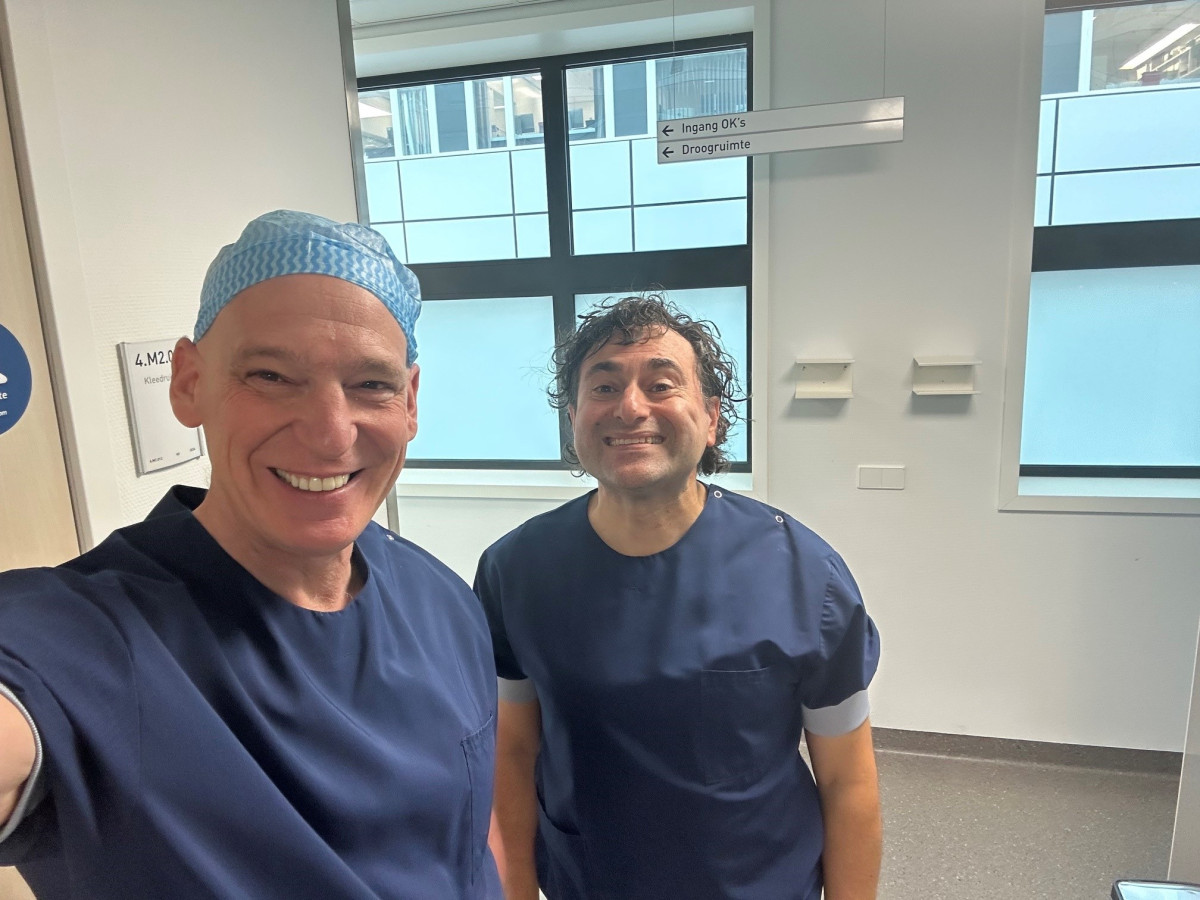
De band tussen Steven Ojemann en Maastricht ontstond jaren geleden tijdens een opleiding van de European Association of Neurosurgical Societies (EANS) op het gebied van functionele neurochirurgie. Daar ontmoette hij Yasin Temel, neurochirurg en medisch directeur van het Hersen+Zenuw Centrum. Ze bleken interesses te delen in onder meer brain-computer interfaces, cel- en gentherapie en nieuwe behandelingen voor epilepsie. Drie jaar geleden nodigde Temel hem voor het eerst uit naar Maastricht. Temel bezocht op zijn beurt Ojemann in Colorado. Sindsdien ontmoeten ze elkaar regelmatig tijdens internationale bijeenkomsten.
Andere systemen, dezelfde patiënt
Juist de verschillen tussen Europa en de Verenigde Staten maken die contacten interessant, vindt Ojemann. Nieuwe behandelingen en technologieën komen niet overal op hetzelfde moment beschikbaar. Soms loopt Europa voorop, soms de Verenigde Staten. “Onze zorgsystemen verschillen, maar uiteindelijk proberen we dezelfde problemen op te lossen. Voor een patiënt maakt het niet zoveel uit in welk systeem hij zit. Die heeft een probleem. De vraag is: welke oplossingen werken en welke niet?” Over de grenzen van het eigen zorgsysteem kijken helpt volgens hem om eerder te zien wat elders mogelijk is – en wat daarvan te leren valt.
Nieuwe mogelijkheden bij epilepsie
Een van de onderwerpen die Ojemann in Maastricht besprak, is responsive neurostimulation (RNS) bij epilepsie. Deze behandeling wordt in de Verenigde Staten al jaren toegepast. Een geïmplanteerd systeem registreert hersenactiviteit en kan met elektrische stimulatie reageren wanneer bepaalde afwijkende activiteit wordt waargenomen. Het systeem levert bovendien langdurig gegevens op over epileptische activiteit. Daardoor kunnen patronen over weken en maanden zichtbaar worden die tijdens een ziekenhuisopname van enkele dagen moeilijk te ontdekken zijn. Ook experimentele celtherapie bij epilepsie kwam aan bod. Het idee daarachter spreekt Ojemann aan: neurochirurgie hoeft niet alleen te draaien om het verwijderen of uitschakelen van hersenweefsel. Nieuwe therapieën proberen hersenfuncties juist gerichter te beïnvloeden of te ondersteunen. De eerste resultaten noemt hij interessant, maar hij tempert de verwachtingen. Vooralsnog gaat het om een experimentele behandeling die aanvallen kan verminderen, niet om genezing.
‘Iedereen probeert zo’n centrum te bouwen’
Wat Ojemann in Maastricht aanspreekt, is dat verschillende vakgebieden binnen het Hersen+Zenuw Centrum samenkomen. “Voor veel instellingen is het een soort heilige graal om een centrum als dit te kunnen bouwen. Het is een benijdenswaardig voorbeeld van multidisciplinaire samenwerking en van investeren in neurotechnologie en biologische therapieën.” De ontwikkeling van zijn vakgebied kan volgens hem niet vanuit de neurochirurgie alleen plaatsvinden. Daarvoor zijn verschillende disciplines nodig. “Dit soort multidisciplinaire centra is de toekomst van ons vakgebied.” Ook op de operatiekamer viel hem de samenwerking op. Hij zag een team dat duidelijk al lange tijd met elkaar werkt. In de Verenigde Staten ziet hij vaker wisselende samenstellingen. Ojemann gebruikt daarvoor het verschil tussen een crew en een team. Een crew kan professioneel uitstekend functioneren, maar mensen die langere tijd samen opereren bouwen volgens hem iets extra’s op. “Je profiteert van de ervaring die je samen hebt. Je weet wat de ander doet.” Juist in een vak waarin technologie, neurofysiologie en chirurgie steeds meer in elkaar grijpen, is dat volgens hem belangrijk. “Dat is een van de dingen die Maastricht heel goed doet.”
De operatiekamer als ‘living laboratory’
Dat Ojemann neurochirurg werd, kwam niet helemaal uit de lucht vallen: zijn vader was ook neurochirurg. Zelf raakte hij vooral gefascineerd door hersenchirurgie en door de mogelijkheid om tijdens een operatie meer te leren over de werking van het brein. Hij noemt de operatiekamer daarom een mogelijk ‘living laboratory’. Bij bijvoorbeeld epilepsie en bewegingsstoornissen wordt voor de behandeling soms hersenactiviteit gemeten. Als een patiënt daarvoor toestemming geeft, kunnen zulke metingen onder strikte voorwaarden ook wetenschappelijke inzichten opleveren. Eén grens is voor Ojemann helder: wetenschap kan nooit vóór goede patiëntenzorg komen. “Ethiek is cruciaal. Je kunt wetenschap alleen onderdeel van je programma maken als kwaliteit en goede patiëntenzorg op de eerste plaats staan. Die zaken gaan hand in hand.”
Van ernstige tremor naar ambulancehulpverlener
Welke patiënt hem na al die jaren nog altijd bijstaat? Ojemann vertelt over een man die hij vroeg in zijn loopbaan behandelde. De patiënt was in de dertig en had een ernstige essentiële tremor. De tremor beperkte hem bij alledaagse dingen als scheren. Maar hij vertelde Ojemann ook wat hij nog meer miste: gewoon de wang van zijn vrouw kunnen strelen. En hij had een ambitie die door zijn tremor buiten bereik leek: ambulancehulpverlener worden. De operatie slaagde en de tremor kwam goed onder controle. De patiënt werd uiteindelijk ambulancehulpverlener. Ojemann bleef hem volgen en heeft na tientallen jaren nog altijd af en toe contact met hem. “Het is een voorrecht als je op één moment in iemands leven zo’n bepalende rol kunt spelen en vervolgens ziet hoe dat doorwerkt in de rest van zijn leven.” Voor Ojemann raakt dat aan de kern van neurochirurgie. Een operatie kan diep ingrijpen in iemands leven. “We moeten er alles aan doen om ervoor te zorgen dat die invloed positief is.”
Wanneer is een carrière geslaagd?
Ojemann kijkt daarbij niet alleen naar de operaties die hij zelf heeft uitgevoerd. In Colorado leidt hij jonge neurochirurgen op binnen de functionele neurochirurgie en epilepsiechirurgie. Wat zij later bereiken, beschouwt hij als een van de waardevolste onderdelen van zijn werk. Die manier van kijken herkent hij bij Temel. Ojemann roemt diens vermogen om jonge artsen en onderzoekers ruimte te geven zich te ontwikkelen. “Een van de dingen die ik door de jaren heen van hem heb geleerd, gaat over leiderschap: hoe je het succes van de mensen om je heen kunt stimuleren.” Uiteindelijk meet Ojemann het succes van een loopbaan dan ook niet alleen af aan operaties, onderzoek of publicaties. Minstens zo belangrijk zijn de patiënten voor wie je iets hebt kunnen betekenen en de mensen die je hebt opgeleid. Daarmee raakt hij misschien wel aan de kern van zijn bezoek aan Maastricht: kennis uitwisselen over wat vandaag mogelijk is in de neurochirurgie, én investeren in de mensen die het vak morgen verder brengen.
In english:
Steven Ojemann: ‘Multidisciplinary centers like this are the future of our field’
American neurosurgeon Steven Ojemann visited the Department of Neurosurgery at the Brain+Nerve Centre this week. Ojemann is Professor of Neurosurgery at the University of Colorado and Director of Stereotactic and Functional Neurosurgery. He specializes in functional neurosurgery, with a particular focus on epilepsy, movement disorders and neuromodulation. During his visit to Maastricht, he joined colleagues in the operating room and exchanged knowledge on new developments in the field, including emerging treatment options for epilepsy. What stood out to him in Maastricht? The way different disciplines – and the surgical team itself – work together.
Why Maastricht?
The connection between Steven Ojemann and Maastricht began years ago during a European Association of Neurosurgical Societies (EANS) training course in functional neurosurgery. It was there that he met Yasin Temel, neurosurgeon and Medical Director of the Brain+Nerve Centre. They soon discovered shared interests in areas such as brain-computer interfaces, cell and gene therapies, and new treatments for epilepsy. Three years ago, Temel invited Ojemann to Maastricht for the first time. Temel later visited Ojemann in Colorado, and the two have continued to meet regularly at international conferences.
Different systems, the same patient
For Ojemann, the differences between Europe and the United States are precisely what make these international connections valuable. New treatments and technologies do not become available everywhere at the same time. Sometimes Europe is ahead; sometimes the United States is. “Our healthcare systems are different, but ultimately we are trying to solve the same problems. For a patient, it doesn’t matter that much which system they are in. They have a problem. The question is: which solutions work and which don’t?” Looking beyond the boundaries of your own healthcare system, he says, allows you to see what is already possible elsewhere – and what can be learned from it.
New possibilities in epilepsy treatment
One of the topics Ojemann discussed in Maastricht was responsive neurostimulation (RNS) for epilepsy, a treatment that has been used in the United States for several years. An implanted system records brain activity and can respond with electrical stimulation when certain abnormal activity is detected. The system also provides long-term data on epileptic activity. This can reveal patterns over weeks or months that are difficult to identify during a hospital admission lasting only a few days.
Experimental cell therapy for epilepsy was another topic of discussion. Ojemann is particularly interested in the idea behind it: neurosurgery does not necessarily have to focus solely on removing or disrupting brain tissue. New therapies may offer ways to influence or support brain function in a more targeted manner. He describes the early results as interesting, but is careful not to raise expectations too high. For now, this remains an experimental treatment that may reduce seizures; it is not a cure.
‘Everyone is trying to build a center like this’
What particularly appeals to Ojemann about Maastricht is the way different areas of expertise are brought together within the Brain+Nerve Centre. “For many institutions, building a center like this is something of a holy grail. It is an enviable example of multidisciplinary collaboration and of investing in neurotechnology and biological therapies.” In his view, the future of neurosurgery cannot be shaped by neurosurgeons alone. Progress increasingly depends on collaboration across disciplines. “Multidisciplinary centers like this are the future of our field.”
The teamwork in the operating room also caught his attention. Ojemann saw a team whose members had clearly been working together for a long time. In the United States, he more often encounters changing team compositions. He describes the distinction as the difference between a crew and a team. A crew may function extremely well professionally, but people who operate together over a longer period build something extra. “You benefit from the experience you have built together. You know what the other person is going to do.” That becomes increasingly important in a field where technology, neurophysiology and surgery are becoming ever more intertwined. “That is one of the things Maastricht does very well.”
The operating room as a ‘living laboratory’
Ojemann’s decision to become a neurosurgeon did not come entirely out of the blue: his father was a neurosurgeon as well. What fascinated Ojemann himself was brain surgery and the opportunity to learn more about how the brain works while treating patients. This is why he describes the operating room as a potential “living laboratory.” In conditions such as epilepsy and movement disorders, brain activity may be recorded as part of a patient’s treatment. With the patient’s consent and under strict conditions, these recordings can also provide valuable scientific insights. For Ojemann, however, one boundary is clear: science can never take precedence over good patient care. “Ethics is crucial. You can only make science part of your program if quality and good patient care come first. Those things go hand in hand.”
From severe tremor to paramedic
Which patient has stayed with him after all these years? Ojemann recalls a man he treated early in his career. The patient was in his thirties and had severe essential tremor. The tremor affected everyday activities such as shaving. But the patient also told Ojemann about something else he missed: simply being able to stroke his wife’s cheek. And he had an ambition that seemed out of reach because of his tremor – he wanted to become a paramedic. The surgery was successful and brought the tremor under good control. The patient eventually became a paramedic. Ojemann continued to follow him and, decades later, they still occasionally keep in touch. “It is a privilege to play such a defining role at one moment in someone’s life and then see how that continues to affect the rest of their life.” For Ojemann, this touches on the essence of neurosurgery. An operation can have a profound impact on someone’s life. “We have to do everything we can to make sure that impact is a positive one.”
What makes a successful career?
Ojemann does not measure his career solely by the operations he has performed. In Colorado, he trains young neurosurgeons in functional neurosurgery and epilepsy surgery. Seeing what they go on to achieve is one of the most rewarding aspects of his work. He recognizes the same philosophy in Temel and particularly values his ability to give young doctors and researchers the opportunity to develop. “One of the things I have learned from him over the years is about leadership: how you can help the people around you succeed.” Ultimately, Ojemann believes the success of a career should not be measured only in surgeries, research or publications. Equally important are the patients whose lives you have been able to change and the people you have helped to train. Perhaps that also captures the essence of his visit to Maastricht: exchanging knowledge about what is possible in neurosurgery today, while investing in the people who will take the field forward tomorrow.